Finding bed bugs can make you want to throw out the mattress, spray everything in sight and sleep somewhere else immediately. Unfortunately, those are exactly the kinds of reactions that can make an infestation harder to control.
Bed bugs are stubborn, good at hiding and surprisingly easy to move from one room to another. Getting rid of them usually takes more than one trick. The most effective approach is a combination of careful inspection, heat, cleaning, monitoring and—when needed—properly used pest-control products or professional treatment.
Here is a practical way to deal with bed bugs without turning the whole house upside down.
1. Make Sure You Are Actually Dealing With Bed Bugs
Bites alone are not enough to confirm an infestation. Mosquitoes, fleas, skin irritation and other causes can produce marks that look similar.
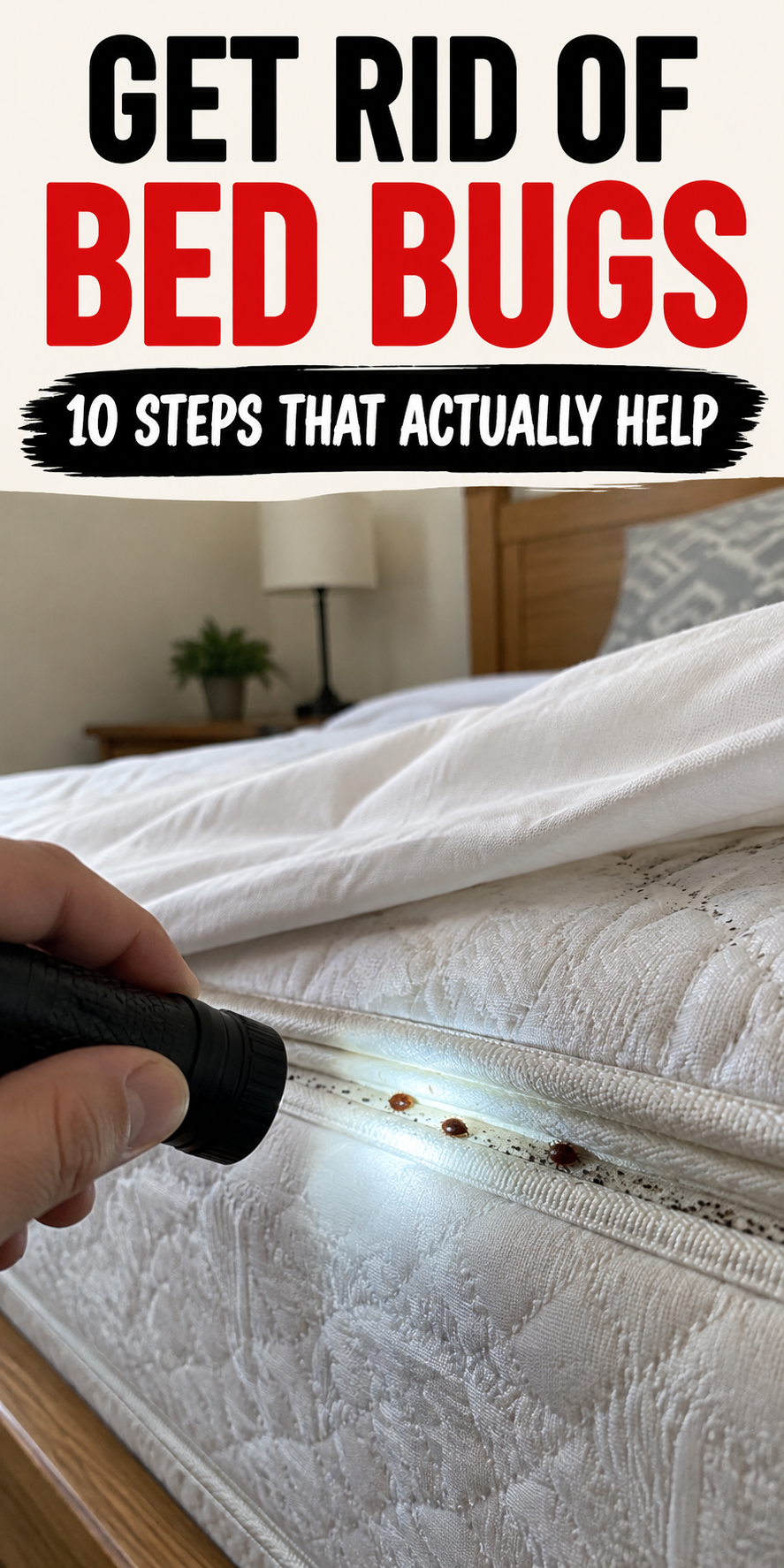
Instead, inspect the places closest to where people sleep. Look along mattress seams, around the bed frame and headboard, underneath furniture edges and inside nearby cracks. Useful clues include live bugs, pale shed skins, tiny dark spots and rusty-looking stains on bedding.
Adult bed bugs are small, flat and reddish-brown. Younger bugs can be much harder to see, especially before they have fed.
2. Do Not Immediately Carry Things Into Another Room
This is one of the easiest mistakes to make. Moving blankets, pillows, clothes or furniture through the house can give hidden bed bugs a free ride into previously unaffected rooms.
If you need to move washable items, place them directly into sealed bags or containers first. Open the bag only when the contents are ready to go into the washing machine or dryer.
Try to keep sleeping in the same room while treatment is underway unless a professional tells you otherwise. Moving to the sofa or spare bedroom can encourage the infestation to spread closer to the new sleeping area.
3. Use the Dryer Strategically
Heat is one of the most useful non-chemical tools against bed bugs. Clothing, bedding and other dryer-safe items can be treated in a clothes dryer using an appropriately hot cycle for the fabric.
The dryer matters more than simply washing. Washing alone may not reliably kill every life stage, while sufficient heat can kill both bugs and eggs.
After treating items, place clean belongings into fresh sealed bags or clean containers so they do not become infested again while the room is being treated.
4. Vacuum the Places Bed Bugs Like to Hide
Vacuum mattress seams, bed frames, baseboards, cracks and the edges of carpets. A crevice attachment is useful because bed bugs often hide in narrow spaces rather than in the middle of open surfaces.
Vacuuming will not eliminate an infestation by itself, but it can physically remove bugs, shed skins and debris while making inspection easier.
When you finish, empty the vacuum contents into a sealed bag and dispose of it appropriately. If your vacuum uses a reusable container, clean it carefully so you do not accidentally reintroduce bugs later.
5. Reduce Clutter, But Do It Carefully
A cluttered bedroom gives bed bugs more hiding places and makes treatment harder. That does not mean throwing everything into the hallway.
Sort belongings inside the affected room. Items that can be heat-treated should be bagged for treatment. Items that do not need to stay in the room can be inspected before being moved.
Pay special attention to piles of clothes, cardboard, fabric storage bins, bedside clutter and anything stored underneath the bed.
6. Isolate the Bed
Pull the bed slightly away from the wall and make sure sheets and blankets are not touching the floor. Bed bug interceptor cups placed under bed legs can help trap and monitor bugs trying to climb onto or leave the bed.
A bed bug-proof mattress and box-spring encasement can also simplify inspections by removing many hiding places. Choose an encasement specifically designed for bed bugs and leave it installed according to the manufacturer’s instructions.
7. Do Not Rely on Bug Bombs
Foggers and so-called bug bombs are tempting because they seem easy: set one off and treat the whole room. Bed bugs, however, spend much of their time hidden deep inside cracks, furniture and other protected spaces where fog may not reach effectively.
Incorrect pesticide use can also create safety risks. Never assume that using more product means better control. If you use any pesticide, use only a product legally approved and labeled for the intended use, and follow the label exactly.
Do not mix pesticides or household chemicals in an attempt to create a stronger treatment.
8. Check More Than Just the Mattress
A perfectly clean mattress does not mean the room is clear. Bed bugs can hide in screw holes, behind headboards, inside bedside furniture, along baseboards, under carpet edges and in cracks close to the sleeping area.
Use a flashlight and inspect slowly. In a heavier infestation, bugs may be found farther from the bed as well.
9. Repeat Inspections Instead of Expecting a One-Day Fix
Bed bug control usually requires patience. Eggs can survive some treatments, and hidden bugs can be missed during the first round.
Continue monitoring the room after treatment. Interceptor traps, fresh inspections and checking bedding for new signs can help you tell whether activity is actually decreasing.
One quiet night does not necessarily mean the infestation is gone.
10. Know When DIY Treatment Is No Longer Enough
A small, recently discovered infestation may be easier to manage than one that has spread through several rooms. If you continue seeing live bugs after repeated treatment, find them in multiple rooms or live in an apartment where neighboring units could also be affected, professional help becomes especially valuable.
Look for a pest-control company with specific experience treating bed bugs. A good treatment plan may combine inspection, heat, targeted pesticides, monitoring and follow-up visits rather than relying on a single application.
Do Bed Bugs Mean Your Home Is Dirty?
No. Bed bugs can appear in very clean homes, hotels and apartments. They usually arrive by hitchhiking on luggage, clothing, used furniture or other belongings. Clutter can make them harder to find, but cleanliness alone does not determine whether you get bed bugs.
Can Bed Bugs Spread Disease?
Bed bugs are not known to spread disease to people. Their bites can still be extremely irritating, and scratching can lead to secondary skin infections. Some people develop stronger allergic reactions than others.
If a bite reaction is severe, swelling is significant, breathing becomes difficult or you are worried about an infection, seek medical care.
What Usually Makes a Bed Bug Problem Worse?
- Moving untreated bedding and furniture into other rooms.
- Sleeping in a different room without a treatment plan.
- Using random pesticides or applying more than the label allows.
- Throwing away furniture before carefully containing or treating it.
- Assuming washing clothes alone is enough.
- Stopping treatment as soon as bites disappear.
- Ignoring neighboring rooms or apartments when the infestation may have spread.
A Better Bed Bug Plan
Bed bugs are one of those pests where doing ten random things is usually less useful than doing five things carefully. Confirm the infestation, contain belongings, use heat where appropriate, reduce hiding places, monitor the bed and repeat inspections.
If the problem keeps returning, do not keep escalating DIY treatments blindly. Bed bugs can be difficult to eliminate completely, and a professional who deals with them regularly may save both time and money in the long run.
The most important thing is to act methodically. Bed bugs are unpleasant, but panic is not a treatment plan.
If you are also dealing with other household pests, you may find our guides on how to get rid of cockroaches and how to get rid of rats safely useful.
