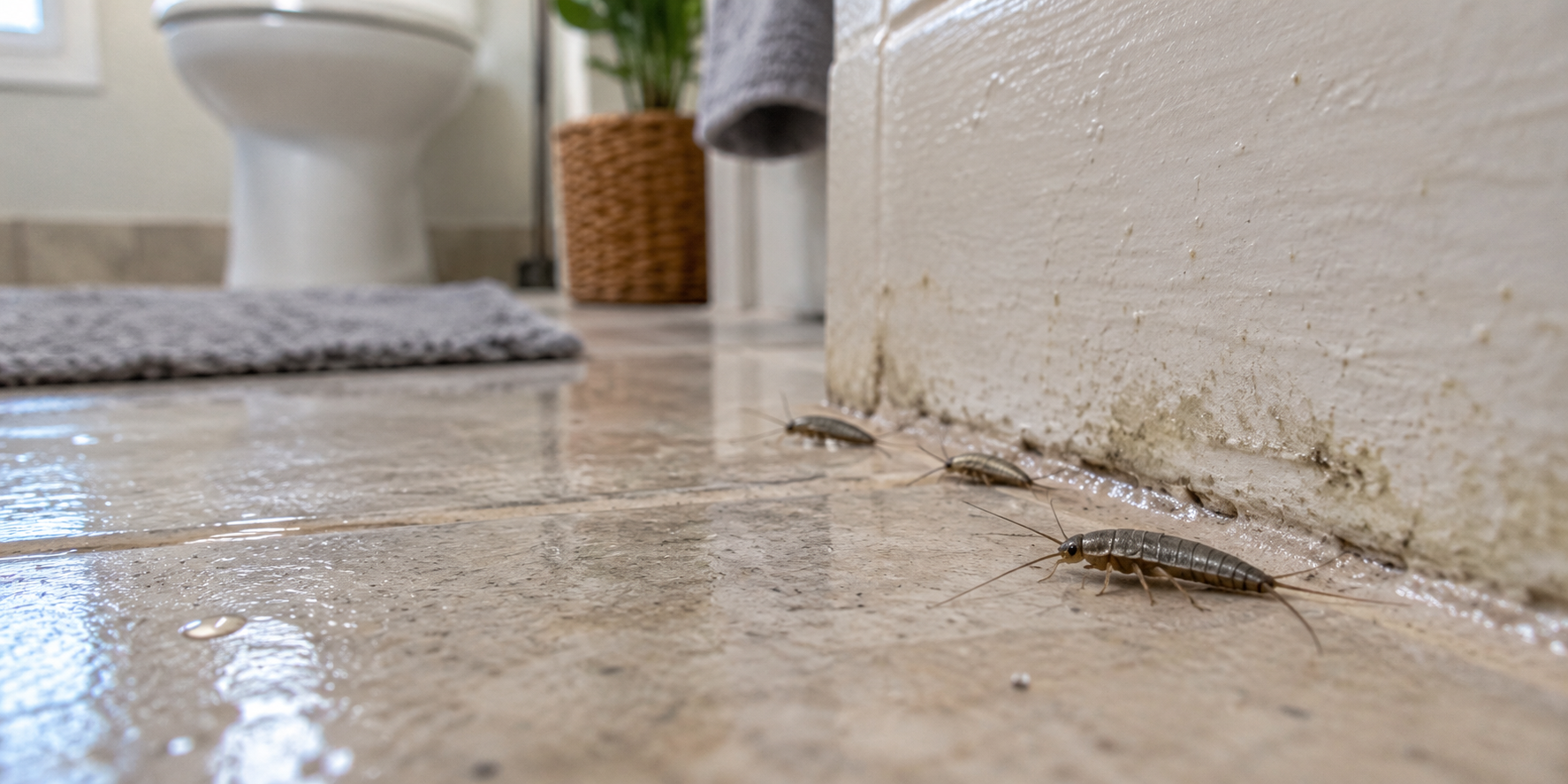

You switch on the bathroom light at night and something small, silver, and ridiculously fast disappears under the baseboard. If that sounds familiar, you have probably met a silverfish.
They are easy to dismiss as a random bug that wandered indoors, but repeated sightings usually mean your home is giving them something they like: moisture, shelter, food, or all three. The good news is that getting rid of silverfish is often less about spraying everything in sight and more about fixing a few surprisingly ordinary conditions.
What are silverfish, exactly?
Silverfish are small, wingless insects with tapered bodies and three tail-like bristles. They prefer dark, protected places and are most active at night. Unlike many household pests, they are not interested in biting people. The bigger issue is what they can damage when their numbers grow.
Silverfish feed on starchy materials and carbohydrates. That can include paper, cardboard, wallpaper paste, book bindings and some natural fabrics. A single sighting is not necessarily a disaster, but seeing them regularly is worth investigating.
1. Your bathroom stays damp for hours
Bathrooms are almost perfect silverfish territory: warm, dark hiding spots plus regular humidity. A steamy shower is normal. The problem is when the room remains damp long afterward.
Run the exhaust fan during a shower and for a while afterward. If you do not have one, opening a window and leaving the door open once you are finished can help. Wipe up water that collects around the tub or shower rather than letting it slowly evaporate.
2. There is a tiny leak you have not noticed
Not every moisture problem leaves an obvious puddle. A slow drip under a sink, condensation around a pipe, or a slightly failing seal can keep a hidden corner damp enough for silverfish.
Use a flashlight to check beneath sinks, behind the toilet, around the washing machine and anywhere pipes enter a wall. Look for swollen particleboard, peeling paint, staining, soft drywall or a musty smell. Fixing the moisture source is much more useful long-term than repeatedly treating the insects you can see.
3. Cardboard boxes have become permanent furniture
I understand the temptation to keep every useful delivery box. Unfortunately, stacks of cardboard also create quiet hiding places, and the paper-based material can be attractive to silverfish.
If boxes are storing things you actually need, plastic bins with fitted lids are a better option, especially in basements, garages and closets. Recycle empty boxes instead of keeping a growing pile “just in case.”
4. Books and papers are packed into humid spaces
A bookshelf in a dry living room is one thing. Old magazines, paperwork and books packed tightly into a damp basement are another.
Silverfish can graze on paper-related materials, adhesives and starches. You do not need to throw away your books. Keep valuable paper items dry, avoid storing them directly on basement floors and periodically check collections that have not been touched for months.
5. Baseboards and pipe openings give them easy hiding spots
Silverfish are built for narrow spaces. Small gaps along baseboards, cracks near trim and openings around plumbing give them protected routes that are easy to miss during normal cleaning.
Once moisture issues are under control, seal obvious cracks and gaps with a material appropriate for the surface. Pay particular attention to plumbing penetrations and gaps where cabinets meet walls.
6. Your basement is cooler, darker and damper than the rest of the house
If silverfish keep appearing downstairs, check humidity before buying another pest product. A simple hygrometer can tell you more than guessing by how the room feels.
Improve ventilation where practical and consider a dehumidifier if the space consistently stays humid. Also keep stored belongings slightly away from walls so air can move around them and problems are easier to spot.
7. Laundry is sitting damp
Wet towels on the floor, a hamper full of damp clothes and bath mats that never quite dry all add moisture to the exact areas silverfish tend to like.
Hang towels so air reaches both sides. Let bath mats dry between uses and avoid tossing genuinely wet clothes into a closed hamper for days. This is a small habit, but it also helps with musty odors and mildew.
8. Clutter is giving them dozens of undisturbed hiding places
Silverfish do not require a dirty home. They do, however, benefit from spaces that stay dark and undisturbed.
Closet floors covered with bags, stacks of magazines, boxes pushed behind furniture and crowded utility cupboards make inspection difficult. You do not need a minimalist house; simply reducing floor-level clutter makes it easier to clean, dry and monitor problem areas.
9. You are treating the bug instead of the room
This is probably the most common mistake. Killing the silverfish you see can reduce activity temporarily, but it does not explain why they are comfortable in that location.
Think of sightings as clues. Bathroom? Check humidity and plumbing. Pantry or closet? Inspect cardboard, paper and cracks. Basement? Measure moisture and review storage. Solving the condition behind the sightings usually gives you a more durable result.
A simple 20-minute silverfish check
If you are not sure where to begin, do one quick inspection instead of trying to deep-clean the entire house.
- Check under bathroom and kitchen sinks for moisture.
- Look behind the toilet and around pipe openings.
- Pick damp towels and clothing up from floors.
- Remove empty cardboard boxes.
- Inspect basement and closet corners with a flashlight.
- Look along baseboards for cracks and gaps.
- Check stored books and papers for damage.
- Measure humidity in rooms that feel damp.
You may find that several sightings trace back to one small problem, such as a leaking connection under the sink or a permanently damp storage corner.
What not to do
Do not start by spraying random pesticides throughout living spaces. Pest-control products should only be used according to their labels, with extra care around children and pets. Also avoid assuming that more fragrance or stronger cleaning chemicals will solve a moisture-driven pest problem.
If silverfish remain numerous after you reduce humidity, remove hiding places and seal obvious entry points, a pest-control professional can help identify areas you cannot easily inspect.
The bottom line
Silverfish are creepy mostly because they appear suddenly and move so fast, but their presence can be useful information about your home. Repeated sightings often point toward excess moisture, undisturbed storage or accessible hiding places.
Start with the boring fixes first: dry the bathroom, investigate leaks, clear cardboard, improve storage and seal gaps. They are not glamorous Pinterest projects, but they are usually the changes that make the biggest difference.
