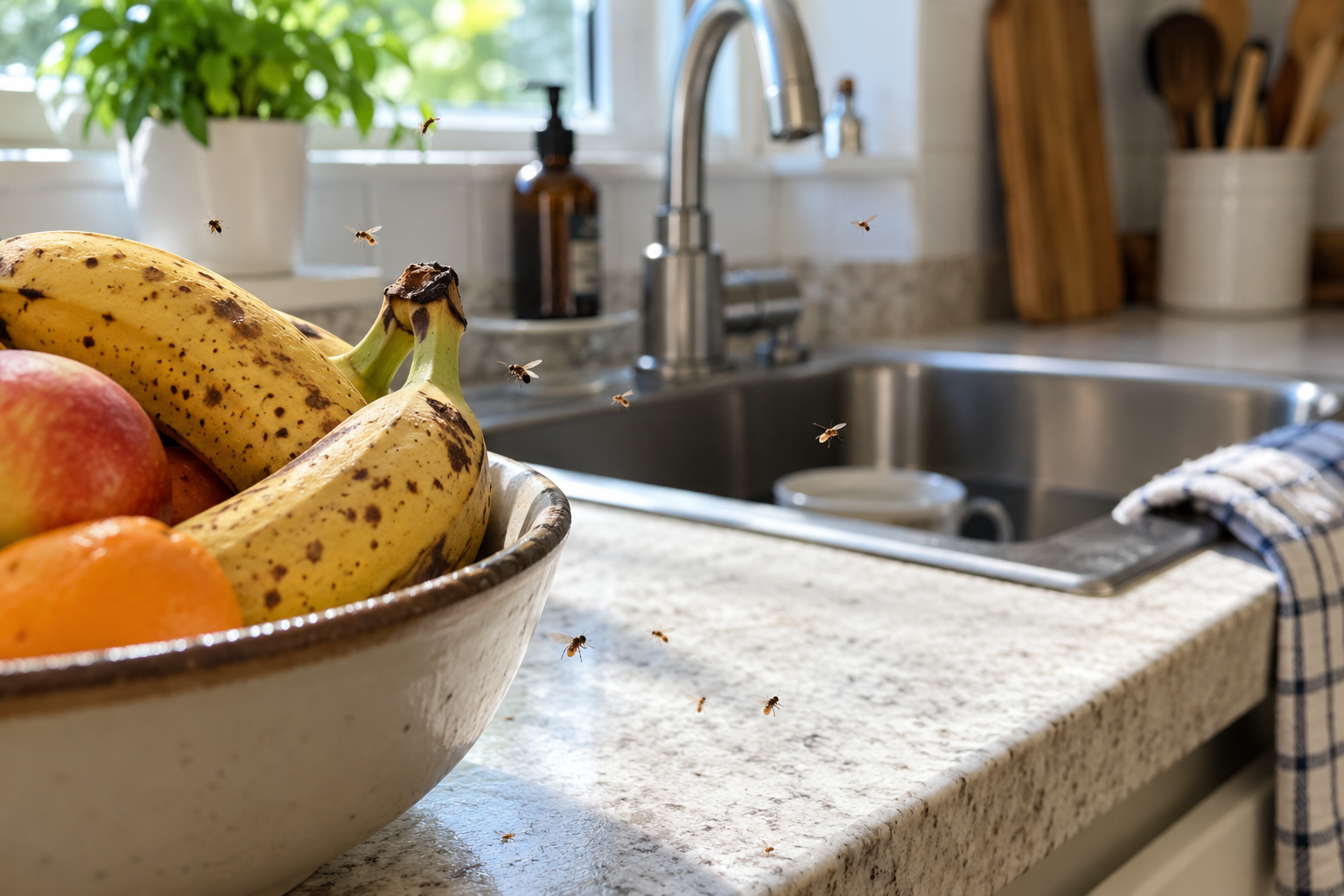

You walk into the kitchen, spot a tiny fly near the sink and immediately think: fruit flies.
That’s a reasonable guess, but it’s not always right. Several small flies can show up indoors, and they often get lumped together even though they breed in completely different places. That matters because a trap on the counter won’t solve a problem that’s actually developing inside a drain or a damp plant pot.
The fastest way to get rid of tiny flies is usually to stop asking, “What can I spray?” and start asking, “Where are they coming from?”
Fruit Flies: Look Around Food First
Fruit flies are the classic kitchen nuisance. They are very small, usually tan to brownish, and you’ll often notice them hovering around ripe fruit, recycling, empty bottles, sticky spills or food scraps.
A fruit bowl is an obvious place to check, but don’t stop there. One forgotten onion in a cupboard, residue under a recycling bin or a little juice left in the bottom of a bottle can keep them around.
Common fruit fly sources
Check overripe produce, potatoes and onions stored in dark cupboards, recycling containers, trash cans, beverage bottles, sticky areas beneath appliances and any food that has fallen somewhere difficult to reach.
If you remove the breeding source, the number of adults should gradually fall. Traps can catch the flies you see, but they work much better as a supporting step than as the entire solution.
Drain Flies: Check the Sink and Floor Drains
Drain flies look noticeably different once you see them up close. Their bodies and wings can appear fuzzy, almost like miniature moths. Instead of flying quickly around the room, they often rest on walls near sinks, showers or drains.
The important clue is moisture plus organic buildup.
Inside a neglected drain, a slimy film can develop on surfaces. If flies are breeding there, simply pouring a scented cleaner down the drain may not remove the material they’re using.
A simple way to investigate
Clean accessible drain components and look for accumulated grime around the drain cover, stopper and other removable parts. Physical cleaning is often more useful than repeatedly adding random chemicals.
If a drain smells strongly of sewage, backs up, leaks or remains unusually slow, treat that as a plumbing issue rather than automatically assuming insects are the main problem.
Fungus Gnats: Your Houseplants May Be the Source
If the flies seem to appear around windows and plants rather than fruit, look at your potting soil.
Fungus gnats are tiny, dark, delicate-looking flies that are frequently associated with moist growing media. Adults may wander into the kitchen even when the actual breeding site is a plant in another room.
Overwatering is a common contributor because consistently damp soil creates favorable conditions for larvae.
What to check
Watch the soil surface when you water or gently move the pot. If tiny dark flies rise from the soil, that’s a much stronger clue than seeing one random insect near the sink.
Allowing the upper layer of soil to dry appropriately between waterings can help for many common houseplants, but watering needs vary by species. Don’t deliberately dehydrate a moisture-loving plant just to fight gnats.
Why Apple Cider Vinegar Doesn’t Fix Every Tiny Fly Problem
The famous vinegar trap is popular for a reason: fermenting odors can attract fruit flies. The problem starts when people assume every small flying insect will respond the same way.
If flies are emerging from a drain, cleaning the breeding material is more important. If they’re coming from potting soil, a glass of vinegar on the counter doesn’t address the soil.
This is why identification saves time. The trap may catch a few adults while hundreds of new insects continue developing somewhere else.
What About Flies Coming From the Trash?
Trash and recycling deserve a closer look even if you take the bags out regularly. Liquid can leak between the bag and the bin, while cans and bottles may contain enough residue to attract insects.
Wash the container itself occasionally and let it dry before adding a new liner. Check the floor and wall immediately behind it too. These are exactly the places where a small spill can sit unnoticed.
Don’t Forget the Garbage Disposal
If your kitchen has a garbage disposal, food residue can remain in areas you don’t see from above. Clean it according to the appliance manufacturer’s instructions and always disconnect power or follow the recommended safety procedure before touching any accessible components.
Never put your hand into a disposal simply because it appears switched off.
How to Get Rid of Tiny Kitchen Flies Step by Step
Start by identifying where you see the highest concentration. Flies gathering around bananas point you in a different direction from flies sitting on the wall beside a drain.
Next, remove likely breeding material. Throw away spoiled produce, clean sticky spills, rinse recycling and inspect stored vegetables. Clean accessible drain surfaces if drain flies are suspected. For fungus gnats, review how often plants are being watered.
Then clean the surrounding area. It’s surprisingly common to remove the obvious source but leave residue underneath the container that held it.
Finally, use traps as a monitoring tool. When the breeding source has actually been addressed, traps can help reduce remaining adults and show whether the population is declining.
Cleaning Mistakes That Keep the Problem Going
The biggest mistake is cleaning only what you can see. Another is moving fruit from the counter into a cupboard without checking whether something is already spoiling inside that cupboard.
Using multiple strong cleaning chemicals is also unnecessary and potentially dangerous. Never mix bleach with ammonia or acidic products. Follow product labels and ventilate the room when using household cleaners.
When Tiny Flies Keep Coming Back
If the problem returns repeatedly, there is probably still a source you haven’t found.
Check less obvious areas: underneath appliances, mop buckets, wet cleaning cloths, recycling storage, forgotten produce, plant saucers and drains that are rarely used.
In apartment buildings, persistent insect activity can occasionally involve plumbing or conditions beyond a single unit. If you’ve removed accessible sources and the problem continues, a qualified pest-control or plumbing professional may be able to identify what you can’t reach.
The Quickest Identification Rule
You don’t need to become an insect expert. Pay attention to location and behavior.
Tiny flies concentrated around ripe or fermenting food are more consistent with fruit flies. Fuzzy, moth-like flies resting near drains suggest drain flies. Small dark flies repeatedly emerging from moist plant soil point toward fungus gnats.
Find the source first. Once you know what is producing the flies, getting rid of them becomes much less mysterious—and usually much easier.
