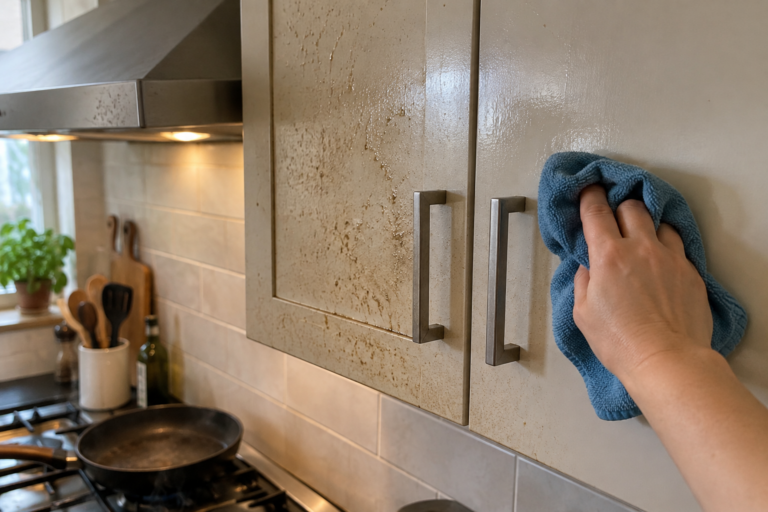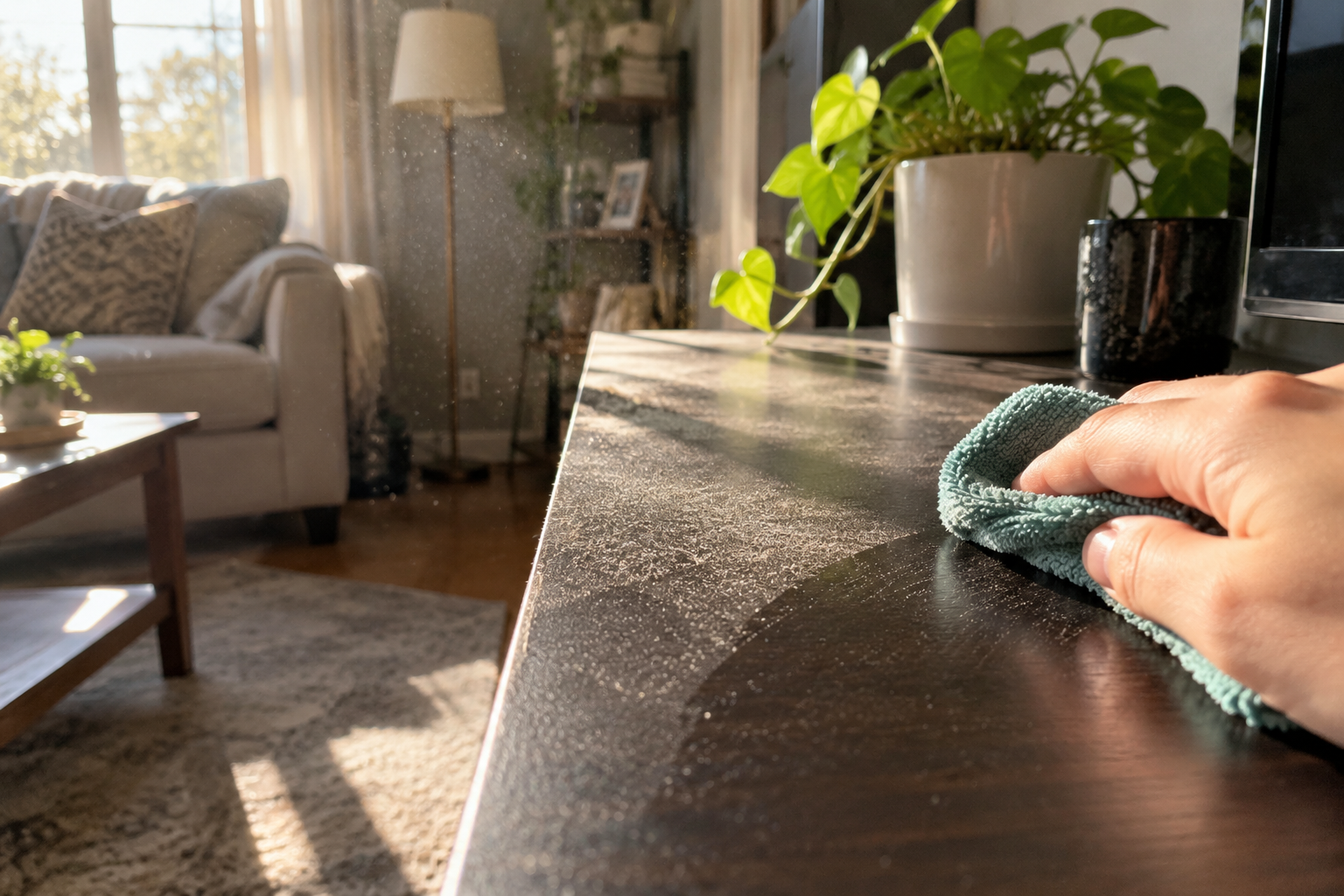
You dust the shelves on Saturday. By Tuesday, there’s already a gray film on the TV stand and little dust clumps gathering in the corners.
It’s tempting to assume your home is simply “a dusty house,” but fast dust buildup often has several causes working together. Some dust is unavoidable—homes contain fibers, hair, skin particles, outdoor soil and plenty of other tiny debris—but a few everyday habits can make it much more noticeable.
Before deciding you need to clean twice as often, check these commonly overlooked dust magnets.
1. You’re Dusting After You Vacuum
Cleaning order matters more than it seems. Dusting shelves, lamps and furniture can knock particles onto the floor. If you already vacuumed, those particles stay there until the next cleaning session.
Work from higher surfaces downward, then vacuum or clean the floor last. It’s a small change, but it prevents you from cleaning the same dirt twice.
2. Your Ceiling Fan Is Holding a Surprising Amount of Dust
Fan blades are easy to ignore because you rarely look directly at their tops. Over time, they can collect a thick layer of dust.
When cleaning a fan, switch it off completely first. Wipe the blades carefully with a damp microfiber cloth or another method appropriate for the fan. Cleaning them periodically keeps that hidden layer from becoming part of the room again.
3. You Keep Windows Open Near a Busy Road
Fresh air is useful, but open windows also provide a direct route for outdoor particles. Homes near roads, construction, dry soil or heavy foot traffic may notice this more than homes in quieter locations.
This doesn’t mean keeping your house sealed. Just pay attention to when the dust seems worst. If a particular window sill gets dirty much faster than everything else, it’s giving you a clue about where some of the particles are entering.
4. Dry Dusting Is Moving Dust Around
A feather duster can make a surface look clean while sending fine particles into the air.
For many hard surfaces, a slightly damp microfiber cloth captures dust more effectively. Use the appropriate cleaning method for delicate wood, electronics and specialty finishes, since excess moisture can damage them.
5. Your Bedding Is a Major Source of Fibers
Bedrooms often become dusty quickly because they contain so much fabric: sheets, blankets, pillows, clothes, rugs and curtains.
Wash bedding regularly according to its care instructions and vacuum around the bed, including underneath it when accessible. That space can collect an impressive combination of lint, hair and dust.
6. The Area Under Your Sofa Has Been Forgotten
If furniture sits low to the floor, it’s easy to clean around it for months without seeing what is accumulating underneath.
Use a vacuum attachment or move lightweight furniture occasionally when it’s safe to do so. The same goes for beds, cabinets and other pieces with narrow gaps underneath.
You don’t need to move every piece of furniture weekly. Rotating one forgotten area into each cleaning session is enough.
7. Too Many Small Decorative Objects Slow Down Cleaning
There’s nothing wrong with displaying things you like. The problem is that a shelf with twenty small objects takes much longer to dust than a shelf with four.
When cleaning becomes inconvenient, we naturally do it less thoroughly.
If certain shelves are constantly dusty, try grouping smaller items on a tray or reducing the number displayed at once. You can rotate decor instead of getting rid of it.
8. Your Vacuum May Need Maintenance
A vacuum only works well when air can move through it properly. A full bin, clogged filter or tangled brush can reduce performance.
Follow the manufacturer’s instructions for emptying the machine, cleaning or replacing filters and removing hair from brush rolls. If your vacuum suddenly seems weaker or starts producing an unusual smell, don’t assume the floor is the problem.
9. Shoes Are Bringing Outdoor Dirt Inside
Every trip outside can bring fine dirt, sand and debris back through the door.
A good doormat helps, and leaving outdoor shoes near the entrance can reduce how much material travels through the rest of the home. The entryway itself may need more frequent vacuuming because it acts as the collection point.
10. Fabric Surfaces Are Being Ignored
We notice dust on a black table because we can see it. Sofas, curtains, upholstered headboards and lampshades can hold particles without looking obviously dirty.
Vacuum suitable upholstery with the correct attachment and follow care instructions for curtains and removable covers. Even occasionally cleaning these large fabric surfaces can make a difference.
11. Your Air Filter or Ventilation System Needs Attention
If your home has a forced-air heating, cooling or ventilation system with replaceable filters, neglected filters can affect airflow and indoor particle control.
There isn’t one universal replacement schedule because filter type, system design, pets and household conditions vary. Check the manufacturer’s recommendations rather than relying on a random calendar reminder.
If vents are visibly dirty, you can clean accessible exterior grilles safely. Problems deeper inside a ventilation system are better handled by a qualified professional.
Does an Air Purifier Solve a Dusty House?
An air purifier can capture some airborne particles, but it won’t stop crumbs, textile fibers, tracked-in dirt or debris already sitting on surfaces.
If you use one, choose a unit sized appropriately for the room and maintain its filters according to the manufacturer’s instructions. Think of it as one part of dust control rather than a replacement for cleaning.
A Simple Routine for a Less Dusty Home
Instead of constantly wiping every visible surface, focus on the places that generate or collect the most debris.
Once a week, dust from top to bottom, clean the most visible hard surfaces and vacuum high-traffic floors. Then choose one easily forgotten area: under the sofa, fan blades, a lampshade, behind furniture or the top of a cabinet.
That rotating approach is easier to maintain than trying to deep-clean the entire house every weekend.
The Real Goal Isn’t a Dust-Free Home
A completely dust-free home isn’t realistic. People live there. Windows open. Clothes shed fibers. Pets lose hair. Outdoor dirt finds its way inside.
The useful question is whether you can slow down how quickly visible dust returns.
Start with the biggest sources: clean from top to bottom, maintain your vacuum, deal with fabric-heavy areas and pay attention to what comes through the entrance and windows. You may discover that you don’t actually need to clean more often—you just need to stop redistributing the same dust.